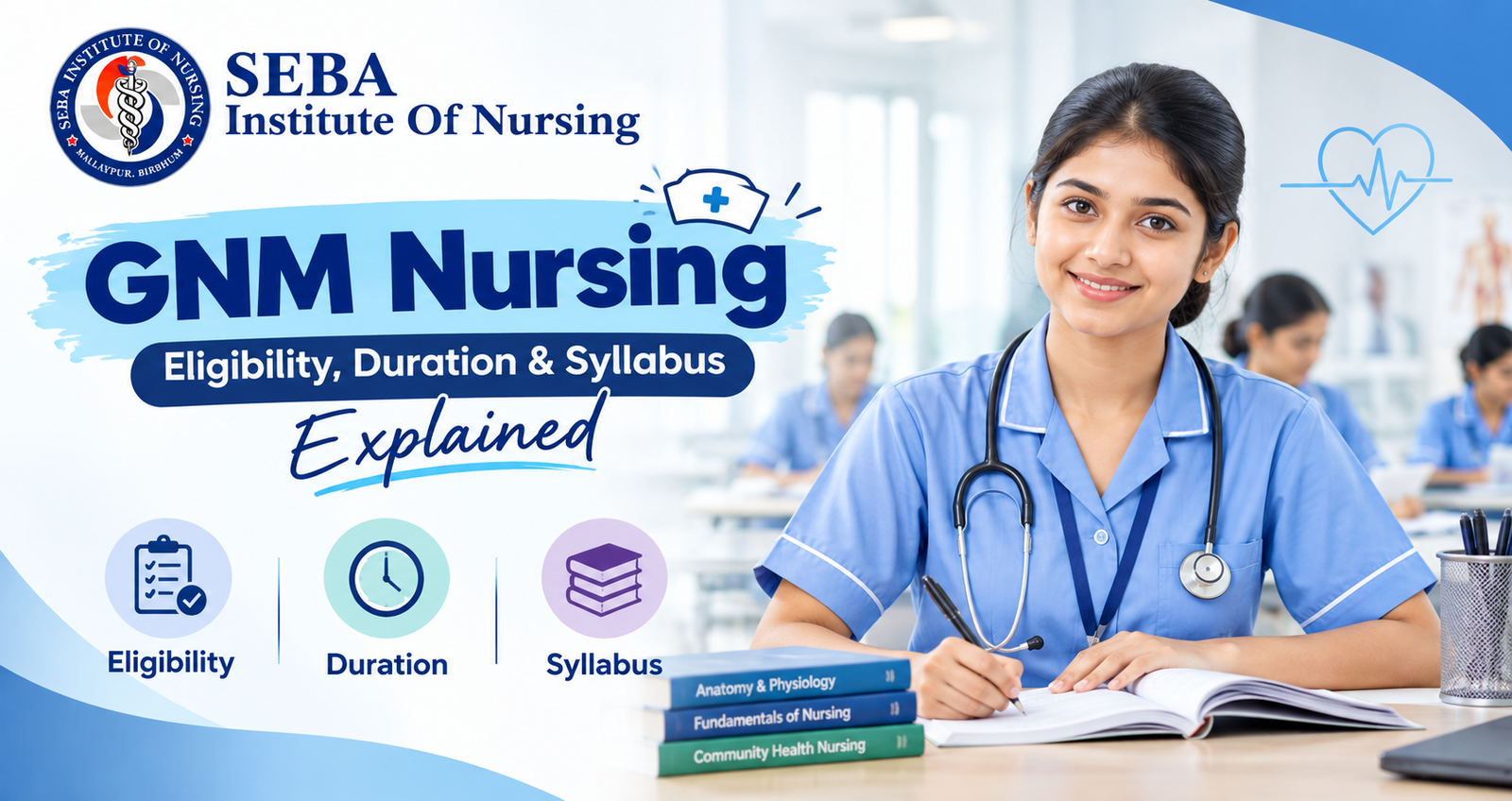
Choosing a career in healthcare is a meaningful decision, especially for students who want to combine science, responsibility, and compassion. GNM nursing is one of the popular nursing education pathways in India. But what does GNM stand for, who can pursue it, what subjects are taught, and what career opportunities follow? This complete guide answers the most important questions students should know before choosing a General Nursing and Midwifery course.
What Is GNM Nursing?
GNM stands for General Nursing and Midwifery. It is a professional nursing programme designed to prepare students to provide patient care, support medical treatment, promote health, and assist mothers and newborns.
GNM students learn both theoretical concepts and practical nursing skills. The course focuses on patient assessment, hygiene, medication administration, first aid, infection prevention, community health, and maternity care. It also develops communication, teamwork, ethical awareness, and professional responsibility.
Unlike a purely academic programme, GNM nursing includes clinical training, allowing students to apply classroom knowledge in hospitals and healthcare settings under supervision.
What Is the Duration of GNM Nursing?
The GNM nursing course generally takes three years of academic training, followed by an internship or practical training period as prescribed by applicable nursing education regulations.
The exact structure, internship requirements, and admission rules may vary according to the institution and current regulatory guidelines. Students should verify the latest details with their preferred college before applying.
GNM Nursing Eligibility in India
Eligibility requirements may differ slightly between institutions, but students generally need to:
- Pass Class 12 or an equivalent examination from a recognised board.
- Meet the minimum marks required by the institution.
- Have studied the subjects specified by the college or applicable regulations.
- Fulfil the minimum age requirement.
- Meet any additional medical fitness or documentation requirements.
Science students may find healthcare subjects familiar, but students from other eligible streams should also check the admission rules of their preferred institution.
What Subjects Are Taught in GNM Nursing?
GNM nursing combines foundational science with practical healthcare education. Common learning areas include anatomy and physiology, microbiology, psychology, sociology, fundamentals of nursing, first aid, health education, medical-surgical nursing, pharmacology, nutrition, mental-health nursing, child health nursing, midwifery, gynaecological nursing, and community health nursing.
The exact syllabus may differ, so applicants should review the current curriculum provided by their chosen institution.
What Skills Do GNM Nurses Develop?
GNM nursing is not only about studying medical information. Students develop practical skills such as checking vital signs, maintaining patient hygiene, administering medicines safely, assisting with procedures, recording patient information, providing health education, and responding to emergencies.
Communication and empathy are equally important. Nurses often support patients and families during difficult situations, making emotional intelligence and professional behaviour valuable parts of training.
Career Opportunities After GNM Nursing
After completing GNM nursing and meeting applicable registration requirements, graduates can explore roles such as:
- Staff nurse in hospitals
- Community health nurse
- Nursing home or rehabilitation care
- Maternity and child healthcare services
- Home healthcare
- Public-health programmes
- School or occupational health services
Career opportunities depend on qualifications, registration, experience, job role, and employer requirements. Some graduates also pursue higher education, specialised training, or competitive healthcare recruitment examinations.
GNM Nursing Salary in India
GNM nursing salaries vary according to location, employer, experience, job role, and clinical speciality. Freshers may begin with entry-level salaries, while experienced nurses working in specialised departments or reputed hospitals may earn more.
Government healthcare facilities, private hospitals, nursing homes, and home healthcare providers may offer different salary structures. Students should consider training quality, career growth, and work environment rather than choosing a course only for salary expectations.
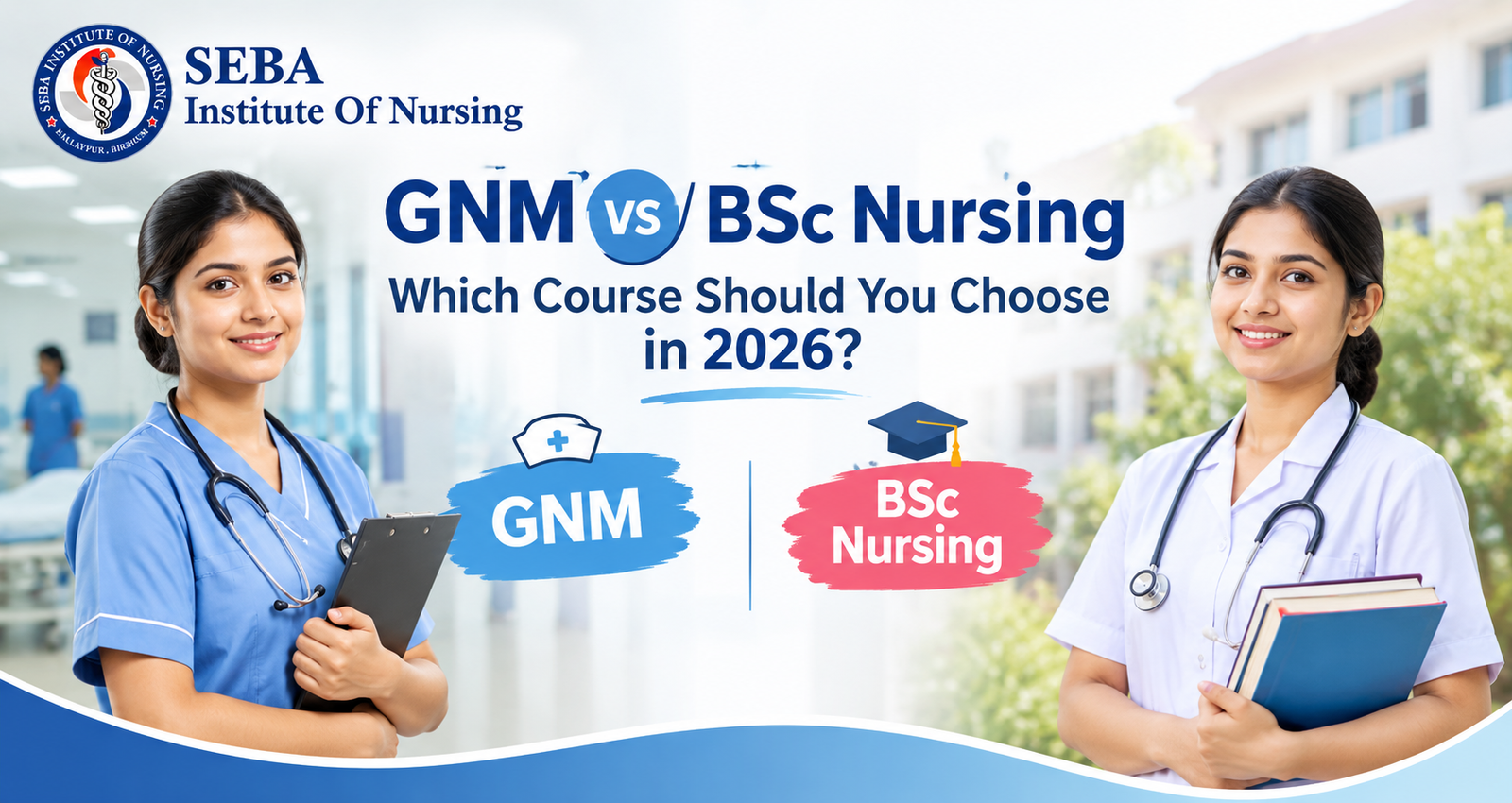
GNM Nursing vs B.Sc. Nursing
GNM and B.Sc. Nursing are both recognised nursing education pathways, but they differ in structure and academic level. GNM is a diploma-level programme focused on practical preparation for patient care and midwifery. B.Sc. Nursing is a degree programme offering broader academic and professional education in nursing.
The right choice depends on eligibility, career goals, preferred study duration, and future education plans. Students should compare curriculum, recognition, clinical exposure, and progression opportunities before deciding.
Why Choose Seba Institute of Nursing?
A good nursing institution should provide more than classroom instruction. Students need practical laboratories, clinical exposure, experienced faculty, disciplined learning environments, and opportunities to develop professional confidence.
At Seba Institute of Nursing, aspiring nurses can work toward building the knowledge, practical skills, and compassionate approach required in healthcare. Students should review the institute’s course details, admission requirements, facilities, and training opportunities before applying.
FAQs:
1. What does GNM stand for?
GNM stands for General Nursing and Midwifery. It is a professional nursing programme that prepares students for patient care, healthcare support, and maternity-related responsibilities.
2. Is GNM nursing a degree or diploma?
GNM is generally a diploma-level nursing programme. Students interested in a nursing degree may also explore B.Sc. Nursing, depending on their eligibility and career goals.
3. What is the duration of GNM nursing in India?
The course generally includes three years of academic training, followed by practical or internship training as required by applicable regulations. Students should confirm the current structure with their institution.
4. Can I pursue GNM nursing after Class 12?
Yes, eligible students who have completed Class 12 can apply, subject to the institution’s admission requirements, minimum marks, age criteria, and applicable regulations.
5. Is GNM nursing a good career option?
GNM nursing can be a rewarding career for students interested in healthcare, patient care, and meaningful service. It offers opportunities in hospitals, community care, maternity services, and other healthcare settings.
6. Can I pursue higher studies after GNM?
Depending on current eligibility rules and recognised progression pathways, GNM graduates may explore further nursing education and specialised professional development. Students should confirm available options with recognised institutions.
7. Is GNM nursing difficult?
The course requires consistent study, practical training, discipline, and emotional maturity. Students who enjoy healthcare learning and helping people can find it challenging but rewarding.
Conclusion
GNM nursing is a practical and career-focused pathway for students who want to enter the healthcare profession. From patient care and medical knowledge to midwifery and community health, the course develops skills that support diverse nursing responsibilities. Before enrolling, students should carefully check eligibility, course duration, recognition, clinical training, and future opportunities. With the right education and dedication, GNM nursing can become the foundation for a fulfilling healthcare career.