The healthcare industry is growing rapidly in India, creating a high demand for skilled nursing professionals. Among the most popular nursing courses after higher secondary education is the General Nursing and Midwifery (GNM) program. Students who wish to build a rewarding career in patient care often choose this course because it combines theoretical learning with practical clinical training.
If you are searching for complete information about GNM nursing eligibility, duration & syllabus explained, this guide will help you understand everything in detail. From admission requirements to career opportunities, we will also cover GNM full details, what is GNM, What is the basic knowledge of GNM?, and the comparison of GNM vs BSc Nursing.
Students looking for quality nursing education can also explore programs offered by Seba Nursing College, known for its practical training and student-focused learning environment.
What is GNM?
GNM stands for General Nursing and Midwifery. It is a diploma-level nursing course designed to train students in clinical nursing practices, patient care, and midwifery skills. The course prepares candidates to work in hospitals, clinics, nursing homes, and community healthcare centers.
The program focuses on developing essential nursing skills such as:
- Patient monitoring
- Emergency care
- Medical assistance
- Community health services
- Maternal and child healthcare
- Communication and patient management
For students asking “what is GNM”, it is one of the best options to enter the healthcare sector quickly and start a professional nursing career.
GNM Full Details
Before applying for the course, students often look for GNM full details including eligibility, duration, fees, and job opportunities. Here is a quick overview:
| Course Name | General Nursing and Midwifery (GNM) |
|---|---|
| Course Type | Diploma |
| Duration | 3 Years + Internship |
| Eligibility | 10+2 Pass |
| Admission Process | Merit-Based or Entrance Exam |
| Career Options | Staff Nurse, Ward Nurse, Community Health Worker |
| Average Salary | ₹2.5 LPA – ₹5 LPA |
The GNM course is suitable for students who are passionate about healthcare and patient support services.
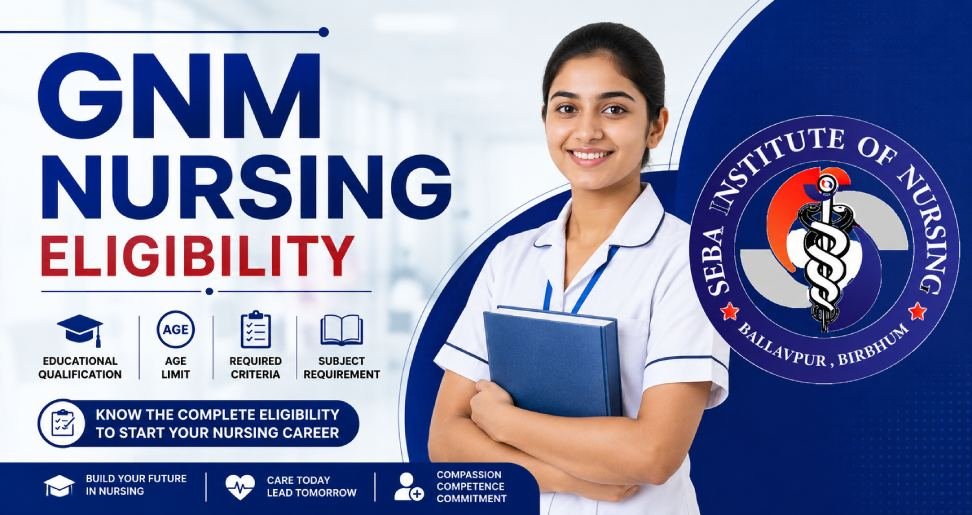
GNM Nursing Eligibility
Understanding the eligibility criteria is important before applying for admission. Different institutions may have slight variations, but the general requirements remain similar.
Educational Qualification
Candidates must have passed 10+2 or equivalent from a recognized board.
Minimum Marks
Most colleges require at least 40% to 50% aggregate marks in higher secondary education.
Preferred Subjects
Science stream students with Biology are generally preferred, but students from Arts and Commerce streams may also apply in some institutions.
Age Limit
The minimum age for admission is usually 17 years, while the upper age limit may vary according to institutional guidelines.
Students seeking proper academic guidance and clinical exposure can consider Seba Nursing College, where nursing education is designed to help students build confidence and professional skills.
Duration of GNM Nursing Course
One of the most common questions among students is about the course duration.
The GNM nursing program generally lasts for:
- 3 years of academic education
- 6 months internship or practical training
During the internship period, students gain hands-on experience in hospitals and healthcare centers. This practical exposure is extremely important because it helps students apply classroom learning in real-life medical situations.
The course duration is structured to ensure students become capable healthcare professionals with both theoretical and practical knowledge.
GNM Nursing Syllabus Explained
The syllabus of the GNM course is designed to provide students with comprehensive nursing education. It covers medical science, patient care, psychology, anatomy, and community health.
First Year Subjects
The first year focuses on foundational nursing concepts and healthcare basics.
Subjects include:
- Anatomy and Physiology
- Microbiology
- Psychology
- Sociology
- Fundamentals of Nursing
- First Aid
- Personal Hygiene
Students also learn basic patient handling techniques and healthcare ethics.
Second Year Subjects
The second year introduces advanced nursing concepts and specialized healthcare training.
Subjects include:
- Medical-Surgical Nursing
- Pharmacology
- Psychiatric Nursing
- Communicable Diseases
- Orthopedic Nursing
- Community Health Nursing
Practical training becomes more intensive during this phase.
Third Year Subjects
The final year focuses on specialized nursing care and professional development.
Subjects include:
- Midwifery and Gynecology
- Pediatric Nursing
- Mental Health Nursing
- Community Health Services
- Nursing Administration
- Clinical Internship
By the end of the program, students become well-prepared for professional nursing responsibilities.
What is the Basic Knowledge of GNM?
Many students ask, “What is the basic knowledge of GNM?”
GNM students are taught the essential knowledge and skills needed to support doctors and care for patients effectively. Some of the basic areas covered include:
- Understanding human anatomy
- Monitoring patient health conditions
- Administering medications
- Infection control techniques
- Emergency healthcare response
- Communication with patients and families
- Maternal and newborn care
The course also develops empathy, discipline, teamwork, and decision-making abilities, which are important qualities for nursing professionals.
GNM vs BSc Nursing
Students often get confused between GNM vs BSc Nursing. Both are popular nursing programs, but they differ in structure, duration, and career scope.
| Feature | GNM | BSc Nursing |
|---|---|---|
| Course Type | Diploma | Degree |
| Duration | 3.5 Years | 4 Years |
| Eligibility | 10+2 | 10+2 with Science |
| Focus | Practical Nursing | Advanced Nursing Education |
| Career Scope | Clinical Roles | Clinical + Administrative Roles |
| Higher Education | Post Basic BSc | MSc Nursing |
GNM is ideal for students who want quicker entry into the healthcare industry, while BSc Nursing offers broader academic and career advancement opportunities.
Career Opportunities After GNM
After completing GNM, students can work in both government and private healthcare sectors.
Popular job roles include:
- Staff Nurse
- ICU Nurse
- Community Health Worker
- Home Care Nurse
- Clinic Assistant
- Ward Nurse
- Nursing Supervisor
Healthcare professionals are always in demand, making nursing a stable and respected career option.
Students graduating from reputed institutions like Seba Nursing College often receive practical exposure that helps them become job-ready professionals.
Why Choose Seba Nursing College?
Choosing the right nursing institution plays an important role in shaping a successful healthcare career. Seba Nursing College focuses on quality education, practical clinical training, and student development.
Some key advantages include:
- Experienced faculty members
- Practical hospital training
- Modern learning environment
- Career-oriented nursing education
- Student-focused academic support
The college helps aspiring nurses gain the confidence and professional skills needed to excel in the healthcare sector.
Conclusion
Understanding GNM nursing eligibility, duration & syllabus explained is important for students planning a future in nursing. The GNM course offers excellent opportunities for individuals who want to serve society through healthcare services.
From learning what is GNM to understanding GNM full details, syllabus structure, and the comparison of GNM vs BSc Nursing, students can make informed career decisions based on their interests and goals.
With proper education and practical training from reputed institutions like Seba Nursing College, students can build a strong foundation for a successful nursing career in India and beyond.