
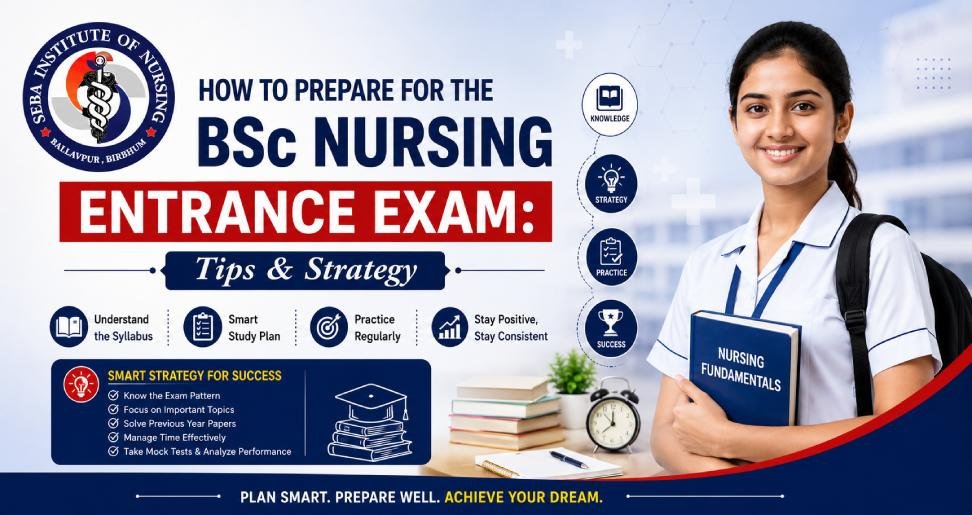
To prepare for the BSc Nursing entrance exam effectively, focus on understanding the syllabus, creating a realistic study schedule, strengthening your Biology, Physics, Chemistry, and General Knowledge concepts, practicing previous years’ question papers, taking mock tests regularly, and improving time management skills. Consistent revision, smart study techniques, and guidance from experienced educators can significantly improve your chances of securing admission to a reputed nursing college. Institutions like SEBA Nursing Institute also help aspiring nursing students by providing quality education and academic guidance for a successful nursing career.
Introduction
The Bachelor of Science in Nursing (BSc Nursing) is one of the most sought-after healthcare courses in India. With the increasing demand for qualified nurses in hospitals, healthcare centers, research institutions, and community healthcare services, many students aspire to pursue this professional degree after completing their higher secondary education.
However, gaining admission to a reputed nursing college often requires clearing a competitive entrance examination. Therefore, understanding how to prepare for the BSc Nursing entrance exam is essential for students aiming to secure a high rank and increase their chances of admission.
This guide covers practical preparation strategies, study plans, exam tips, and common mistakes to avoid so that students can approach the examination with confidence
Understanding the BSc Nursing Entrance Exam
Before starting preparation, students should understand the exam pattern and syllabus.
Most BSc Nursing entrance exams generally assess:
- Biology
- Physics
- Chemistry
- English Language
- General Knowledge
- Logical Reasoning or Aptitude
The exact pattern may vary depending on the university or examination authority. Therefore, candidates should carefully review the official syllabus and exam guidelines before creating their preparation strategy.
Know the Complete Syllabus
One of the most important steps in BSc Nursing entrance preparation is understanding the syllabus thoroughly.
Many students begin studying without knowing what topics are actually included in the examination. This often results in wasted effort and incomplete preparation.
Biology Topics
- Human Physiology
- Cell Structure
- Genetics
- Reproduction
- Ecology
- Plant Physiology
- Biotechnology
Physics Topics
- Motion
- Work and Energy
- Current Electricity
- Optics
- Modern Physics
- Thermodynamics
Chemistry Topics
- Organic Chemistry
- Chemical Bonding
- Acids and Bases
- Periodic Table
- Solutions
- Electrochemistry
Prepare a checklist of all topics and track your progress regularly.
Create a Realistic Study Plan
A well-structured study plan helps students stay organized and focused.
Daily Study Schedule
A balanced schedule may include:
| Subject | Daily Time |
|---|---|
| Biology | 2 Hours |
| Physics | 1.5 Hours |
| Chemistry | 1.5 Hours |
| English & GK | 1 Hour |
| Revision | 1 Hour |
Students should allocate additional time to subjects they find difficult.
Avoid studying continuously for long hours. Short breaks between study sessions improve concentration and retention.
Focus on NCERT Books First
For most nursing entrance examinations, NCERT textbooks from Classes 11 and 12 serve as the foundation.
Why NCERT Is Important
- Concepts are explained clearly.
- Questions are often based directly on NCERT content.
- Helps build strong fundamentals.
- Useful for Biology, Physics, and Chemistry preparation.
Students should thoroughly read each chapter and solve all exercises before moving to advanced reference books.
Strengthen Biology Concepts
Biology usually carries significant weightage in nursing entrance exams.
Students should focus on:
- Human Anatomy
- Human Physiology
- Reproductive System
- Genetics
- Plant Biology
- Biotechnology
Use diagrams, flowcharts, and visual notes to understand complex topics.
Creating short notes for revision can save considerable time during the final weeks before the examination.
Practice Previous Years’ Question Papers
Solving previous years’ papers is one of the most effective preparation techniques.
Benefits of Previous Year Papers
- Understand exam trends.
- Identify important topics.
- Improve speed and accuracy.
- Build confidence.
- Learn time management.
Students should solve papers under actual exam conditions whenever possible.
After solving each paper, analyze mistakes carefully and work on weak areas.
Take Regular Mock Tests
Mock tests simulate the actual examination environment and help students assess their preparation level.
Advantages of Mock Tests
- Improve exam temperament.
- Increase problem-solving speed.
- Enhance time management.
- Identify strengths and weaknesses.
- Reduce exam anxiety.
Aim to take at least one mock test every week during the initial preparation stage and increase the frequency closer to the exam date.
Improve Time Management Skills
Many students know the answers but fail to complete the exam within the allotted time.
Effective Time Management Tips
- Practice solving questions with a timer.
- Avoid spending too much time on a single question.
- Attempt easier questions first.
- Leave difficult questions for later.
- Maintain a steady pace throughout the examination.
Consistent timed practice significantly improves performance.
Prepare English and General Knowledge
While students often focus heavily on science subjects, English and General Knowledge can also contribute valuable marks.
English Preparation
Focus on:
- Vocabulary
- Grammar
- Reading Comprehension
- Sentence Correction
- Synonyms and Antonyms
General Knowledge Preparation
Read regularly about:
- Current Affairs
- Health and Medicine
- Government Health Programs
- National and International Events
Even 20–30 minutes of daily practice can make a noticeable difference.
Develop Effective Revision Techniques
Revision is essential for long-term retention.
Smart Revision Strategies
- Prepare concise notes.
- Use flashcards.
- Create mind maps.
- Revise weekly.
- Focus on frequently tested topics.
Students should dedicate the final month primarily to revision and mock test analysis rather than learning entirely new topics.
Maintain Physical and Mental Health
Preparation is not only about studying.
Students should:
- Sleep 7–8 hours daily.
- Stay hydrated.
- Eat nutritious meals.
- Exercise regularly.
- Avoid excessive screen time.
A healthy body supports better concentration, memory, and overall academic performance.
Common Mistakes to Avoid
Many candidates lose marks due to avoidable errors.
Avoid These Mistakes
❌ Ignoring the syllabus
❌ Studying without a timetable
❌ Skipping mock tests
❌ Neglecting weaker subjects
❌ Overloading study materials
❌ Last-minute cramming
❌ Lack of revision
Instead, focus on consistency and smart preparation throughout the year.
How SEBA Nursing Institute Supports Nursing Aspirants
Choosing the right educational institution plays a crucial role in building a successful nursing career.
SEBA Nursing Institute is committed to nurturing future healthcare professionals through quality nursing education, experienced faculty guidance, practical learning opportunities, and a student-focused academic environment. Students aspiring to enter the nursing profession can benefit from structured learning approaches and academic support that help them develop the knowledge and skills required for success in nursing education and healthcare practice.
The institute aims to prepare students not only for examinations but also for real-world patient care responsibilities, making it a valuable choice for those pursuing a nursing career.
Final Thoughts
Understanding how to prepare for the BSc Nursing entrance exam requires more than simply studying textbooks. Success depends on a combination of strategic planning, conceptual clarity, regular practice, mock tests, effective revision, and disciplined time management.
Students should begin preparation early, focus on NCERT fundamentals, practice previous years’ question papers, and continuously evaluate their progress through mock examinations. By following these proven tips and strategies, aspiring nursing candidates can improve their performance and increase their chances of securing admission to a reputed nursing institution.
With dedication, consistency, and the right guidance from institutions such as SEBA Nursing Institute, students can confidently take the next step toward a rewarding and respected nursing career.